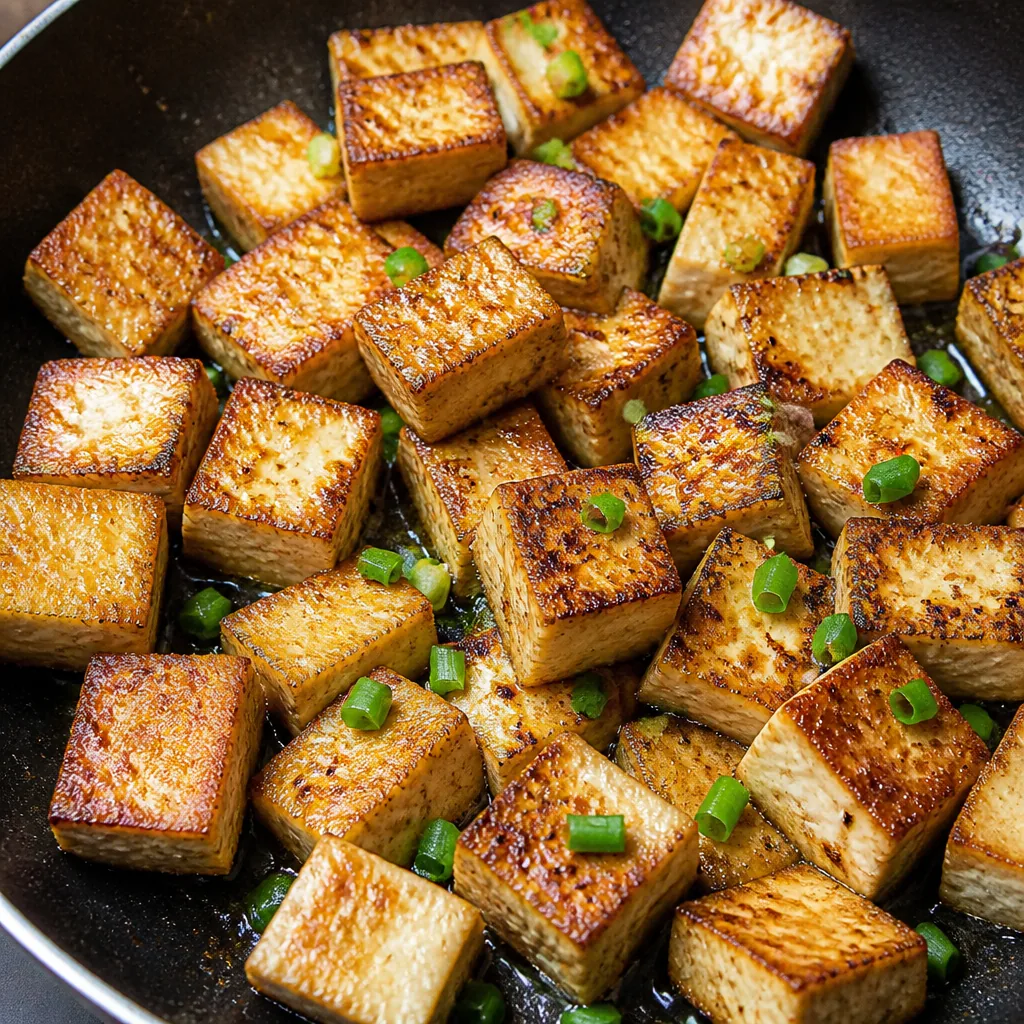
A crisp cube of tofu is one of the small quiet pleasures of cooking: golden and craggy on the outside, still tender in the middle, holding on to whatever sauce you throw at it. It is also the thing most home cooks get wrong, and almost always for the same reasons. The pan is too crowded, or too cool, or the tofu goes in still wet, or it gets poked and flipped every ten seconds so the crust never forms. None of these are hard to fix, and once you understand what browning actually needs — a dry surface, real heat, a little fat, and enough stillness to let a crust develop — you can crisp tofu reliably every single time without any special equipment. This is the technique that converts sceptics, because a properly crisped block tastes and feels almost nothing like the soft, grey stuff that put them off in the first place.
Press first, always
Crisping starts before the pan. Wet tofu cannot brown, because the water on its surface has to boil off before the outside can get hot enough to colour, and by then you have steamed it grey. Press the block first (a firm or extra-firm block, never silken), so the surface is dry and firm to the touch. If you have time to freeze, thaw, and squeeze a block, even better — that spongier texture crisps beautifully. Pat the pressed tofu dry one more time before it goes anywhere near heat.
Cut for surface
Crisp comes from surface area, so cut with that in mind. Cubes around two centimetres give you plenty of faces to brown while keeping a tender middle. Thin slabs or triangles crisp faster and give a higher crust-to-middle ratio if that is what you want. Whatever the shape, keep the pieces even so they cook at the same rate, and do not go too small or they dry out before the outside colours.
A light coating helps
You can crisp bare pressed tofu and it works fine. But a thin dusting of cornflour (cornstarch) before it hits the pan is a genuine upgrade — it dries the surface further and fries into a delicate, shatter-crisp shell. Toss the cubes in a spoonful of cornflour with a pinch of salt until lightly coated, shaking off the excess. Potato starch does the same job. Skip any wet batter; you want a whisper of coating, not a jacket.
The pan and the heat
Use a wide pan so the pieces have room — a good non-stick or a well-seasoned cast-iron both work. The single most common mistake is crowding. Pack the pan and the pieces trap steam between them, drop the temperature, and stew instead of frying. Give each cube space, and cook in two batches if you have to.
Heat the pan over medium-high before adding a decent slick of a neutral oil with a high smoke point. The oil should shimmer. Lay the tofu in a single layer so each piece is touching the metal, and then — this is the hard part — leave it alone.
Flip once per face
When the underside is deep gold and lifts cleanly, turn the pieces onto a fresh face and repeat. With cubes that means several turns to get most sides coloured; with slabs it is just the two flat faces. Resist the urge to stir constantly. Every unnecessary flip interrupts the browning and gives you pale, uneven results. A pair of tongs or a thin spatula and a bit of patience is all it takes.
Season at the end
Hold the salty, sweet, and saucy business until the crust is set. If you add soy sauce or a glaze while the tofu is still trying to brown, the sugars and liquid soften everything back down. Get the pieces crisp first, then kill the heat slightly and toss them with your sauce for the last thirty seconds to a minute — just long enough to coat and cling. A crisp surface actually grips a glaze far better than a soft one, so the flavour ends up right where you taste it.
Keeping it crisp
Crisp tofu is best eaten soon after it leaves the pan. If you are building a bowl or stir-fry, add the tofu last and toss it through at the end rather than letting it sit and soften in sauce. Serve it straight away while the edges still crackle. Any leftovers will go chewy rather than crisp, which is no disaster — they reheat well in a hot pan or oven, and cold crisp tofu is a fine thing to pick at straight from the fridge.