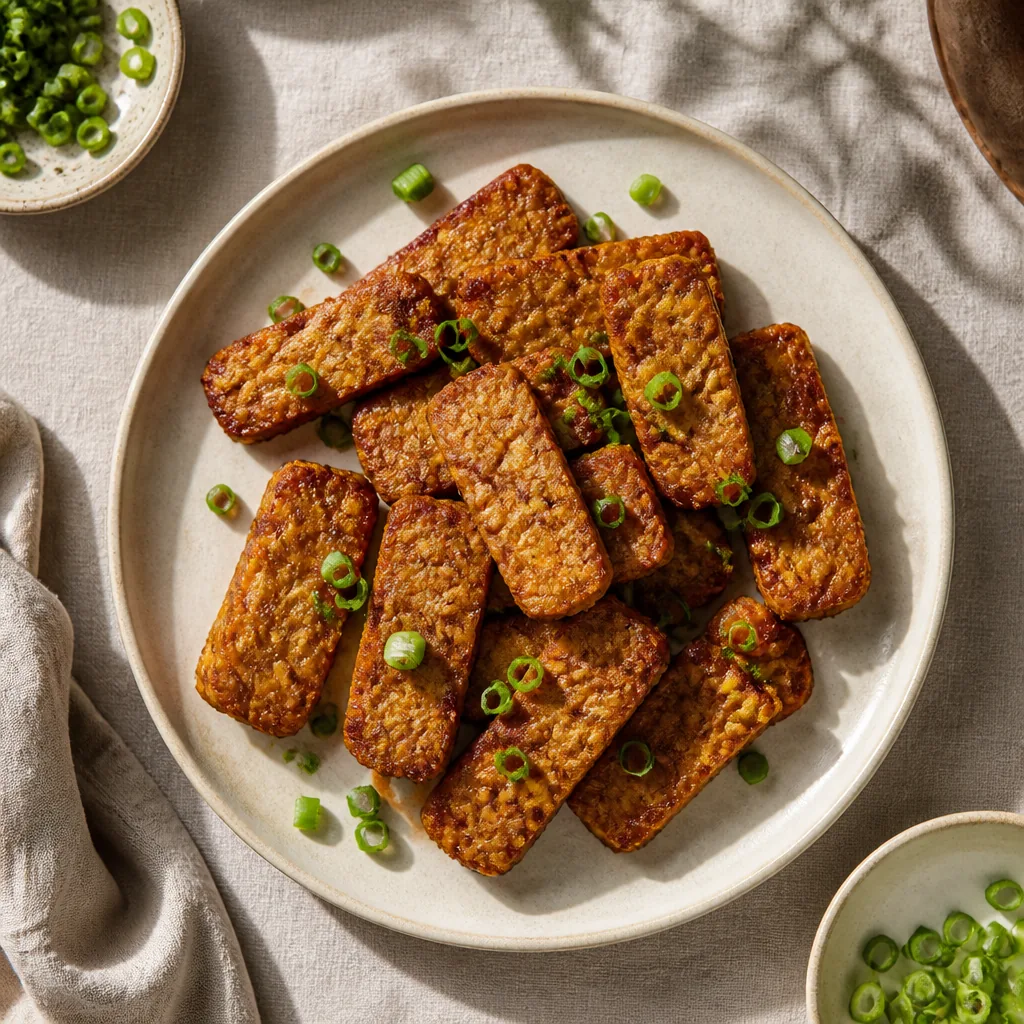
If tofu is the smooth, quiet member of the soy family, tempeh is its more characterful cousin. It is made from whole soybeans bound together by a firm, edible culture into a dense cake, which means it already has structure, bite, and a nutty, almost mushroomy flavour of its own before you do anything to it. That is a gift for a home cook. Where tofu needs pressing and coaxing to develop texture, tempeh arrives with plenty, so you can skip the fuss and get to a good plate faster. It slices cleanly, holds its shape in a hot pan, and browns readily. The one thing tempeh can carry is a faint bitterness on the surface, and a single easy step deals with that. Learn to handle it and tempeh becomes one of the most forgiving things you can cook — firm, savoury, and happy to be crisped, crumbled, glazed, or tucked into almost anything.
What tempeh is, briefly
Tempeh starts as cooked soybeans that are held together by a culture into a firm, sliceable block, sometimes speckled with the whole beans still visible. It is drier and denser than tofu, higher in structure, and it does not weep water the way a fresh block of firm tofu does. That density is why you do not press it and why it stands up so well to a pan. You will usually find it plain, though some blocks come blended with grains or seasoned.
The one step worth doing: a quick steam
Tempeh sometimes carries a mild bitterness on the outside. A brief steam or simmer before cooking mellows it and, as a bonus, opens the block up so it takes on marinade and seasoning more readily. Steam or gently simmer sliced tempeh for about ten minutes, then pat it dry. This is optional — plenty of people skip it and are perfectly happy — but if you have tried tempeh and found it a touch bitter, this is almost certainly the fix.
Crisping it in a pan
This is the simplest and often the best way to cook tempeh. Because it is already firm and dry, it browns easily with no pressing required. Slice it thin, heat a pan over medium-high with a good slick of oil, and lay the pieces in a single layer. Let each side cook undisturbed for a few minutes until it turns deep golden and a little crisp, then flip. Tempeh does not fall apart the way soft tofu can, so it is a relaxed thing to cook. You are looking for colour and a firm, crisp edge.
Season toward the end
Tempeh loves salty, savoury, slightly sweet flavours — soy sauce, maple, a little smoked paprika, garlic. As with tofu, add the wet, sugary seasonings near the end rather than the start, so they glaze and caramelise onto a crisp surface instead of soaking in and stopping it browning. A splash of soy and a drizzle of maple in the last minute, tossed to coat, turns plain crisp tempeh into something sticky and moreish. If you steamed it first, it will drink up a marinade well too — twenty minutes in a savoury mix before cooking goes a long way.
Other easy ways to use it
Crisping is the headline, but tempeh is versatile:
- Crumbled into a hot pan and browned, it makes a hearty base for a ragù, a chilli, or a taco filling — firmer and nuttier than a tofu crumble.
- Cubed and simmered in a curry or stew, it holds its shape and soaks up the sauce without turning to mush.
- Marinated and baked in a hot oven until the edges crisp, it works as a firm, savoury addition to a grain bowl or a sandwich.
Storing and keeping it
Unopened, tempeh keeps well in the fridge for a good while — check the date on the pack. Once opened, wrap it and use it within a few days. It also freezes fine if you want to keep some on hand. A little surface discolouration or a few dark spots on plain tempeh is normal and not a problem; strong off smells or fuzzy coloured growth beyond the natural pale binding are not, so trust your nose. Cooked tempeh reheats well in a pan, which makes it a good candidate for cooking a batch and working through it over a few days.
The short version
Slice it, steam it for ten minutes if you like, dry it, and crisp it in a hot oiled pan until golden. Season with something salty and a touch sweet right at the end. That is genuinely most of what you need to know. Tempeh rewards very little effort with a lot of flavour and texture, which makes it one of the easiest wins in soy cooking.