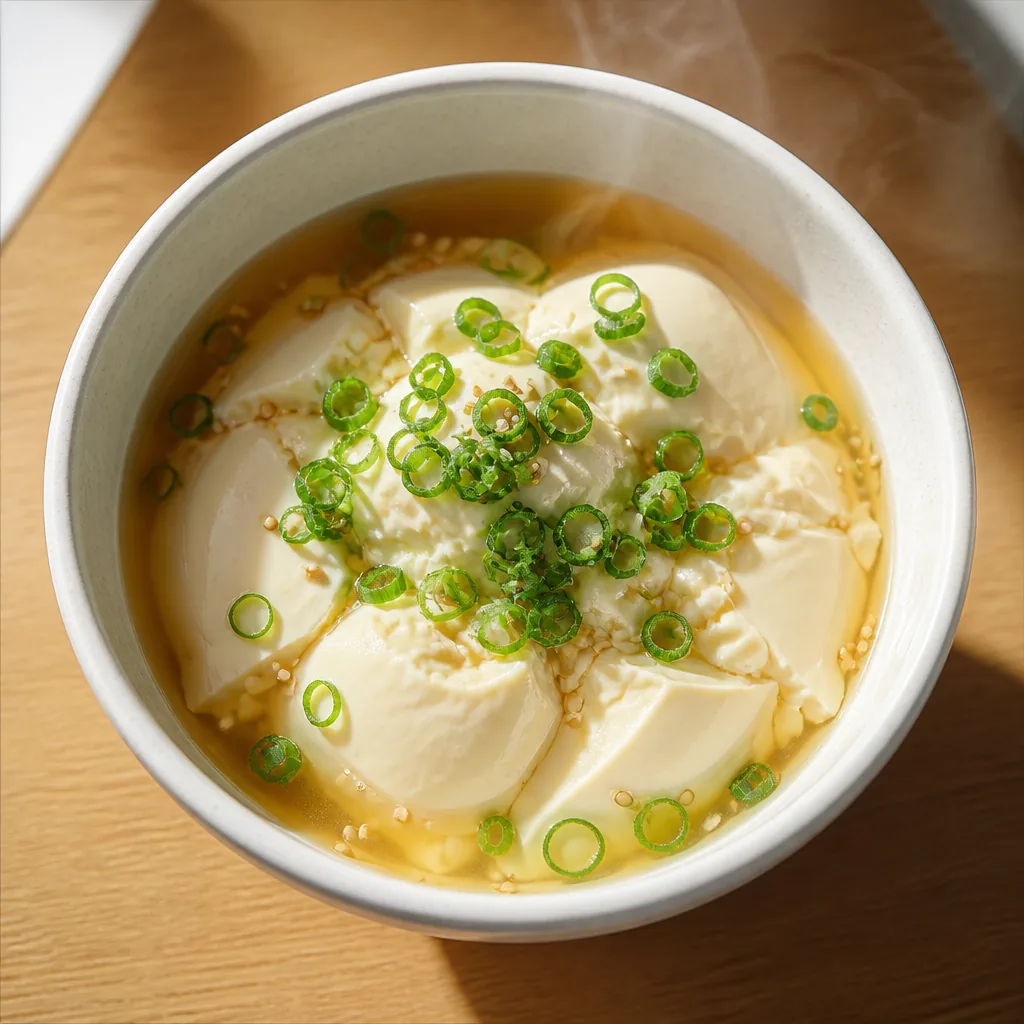
Silken tofu is the one that trips people up, because they treat it like a softer version of the firm block and end up disappointed. It is not that at all — it is a different ingredient with a different job. Made by setting the soy milk without pressing or draining, silken tofu holds all its water inside a smooth, custard-like set, so it wobbles like a light panna cotta and breaks apart at the touch of a spoon. Try to press it and it collapses; try to fry it and it falls to pieces in the pan. But lean into that softness instead of fighting it and a whole other side of tofu opens up. Blended, it turns into silky sauces and creamy puddings without a drop of dairy. Spooned into a hot broth, it slips down like the tenderest thing in the bowl. This is tofu as a texture and a base, not something to crisp — and once you see it that way, a tub in the fridge becomes surprisingly handy.
How silken tofu is different
The key thing to understand is that silken tofu is delicate all the way through. There is no firm skin, no structure to grip, no water to press out — the water is the point, held inside a soft gel. It comes in soft, medium, and firm silken grades, but even the firm silken is far more fragile than a standard firm block. Handle it gently, and choose it deliberately for recipes that want smoothness or a melting softness rather than bite.
Blended: creamy without dairy
This is where silken tofu quietly shines. Whizzed in a blender it becomes glossy and smooth, and it takes on whatever you flavour it with. A few directions:
- Sauces and dressings. Blend it with garlic, lemon, salt, and a little oil for a pourable creamy dressing, or with herbs for a green sauce. It gives body and silkiness where you might otherwise reach for cream or yoghurt.
- Puddings and desserts. Blended with melted dark chocolate and a touch of sweetener, silken tofu sets into a mousse that is genuinely good — light, smooth, and rich, with no one guessing the base.
- Smoothies. A spoonful blended in adds a creamy thickness and a mild flavour that disappears behind fruit.
Because its own flavour is so mild, silken tofu is a background player in all of these — it carries texture and richness while the garlic, lemon, chocolate, or herbs do the talking.
Spooned into soups
In many soups, silken tofu is added in soft spoonfuls or cubes right at the end. It warms through and slips into the broth as the softest, most tender element in the bowl — think of the delicate cubes in a hot-and-sour or miso soup. The trick is a gentle hand: add it near the end, keep the heat low, and stir barely at all, or the cubes break up. Let the tofu heat through rather than boil.
Chilled and simple
One of the nicest and easiest uses needs no cooking at all. Turn a block of chilled silken tofu out onto a plate, spoon over a savoury dressing — soy sauce, a little sesame oil, grated ginger — and scatter with sliced spring onion and toasted sesame. That is a whole dish in five minutes: cool, silky, savoury, and refreshing. It is the sort of thing that makes silken tofu feel less like a substitute and more like an ingredient with its own reason to exist.
Scrambled and folded
Silken tofu also makes a soft, moist scramble. Broken up in a warm pan with turmeric for colour, a pinch of salt, and whatever aromatics you like, it holds a tender, curd-like texture rather than the firmer bite you would get from a pressed block. It can be folded into a soft filling as well, lending creaminess. In all these cases you are using it for softness and moisture, never for structure.
Handling and storing
Open the tub carefully and drain off the surrounding liquid gently, tipping rather than pressing. To turn out a whole block cleanly, loosen the edges and invert it onto a plate in one move. Once opened, keep any leftover silken tofu submerged in fresh water in a covered container in the fridge, change the water daily, and use it within a couple of days. It does not keep as long or as robustly as a firm block, so buy it when you have a use in mind. Treat it gently and choose it for the right jobs, and silken tofu earns its place — not as a lesser tofu, but as the creamy, tender one.