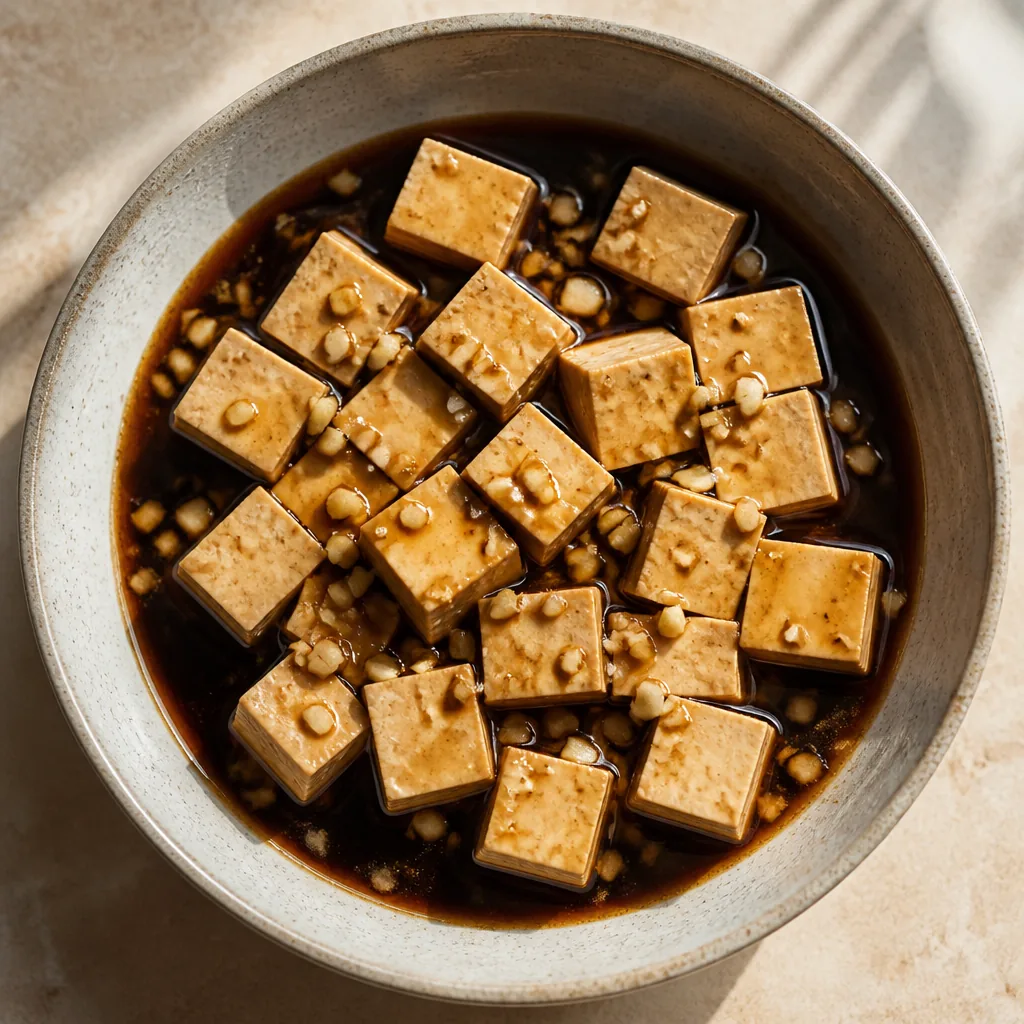
Marinating tofu feels like it should be simple: mix something tasty, drop the tofu in, wait, cook. Then you pull the pieces out an hour later, cook them, and find the flavour has mostly stayed in the bowl. Tofu is stubborn that way. Unlike meat, it has no fibres for a marinade to seep along and no fat to carry flavour inward, so a thin, watery soak barely gets past the surface and slides right off in the pan. The good news is that this is a solvable problem, and the fix is not more marinating time — a block can sit in liquid all day and still taste bland. What matters is preparing the tofu so it can accept flavour, and building a marinade with enough body to actually cling. Get those two things right and even twenty minutes gives you tofu seasoned right to the edge, with a coating that caramelises instead of running away.
Why tofu resists marinade
Two things work against you. First, water: a block straight from the pack is saturated, and a saturated sponge has no room to take anything on. Second, texture: tofu's surface is smooth and dense, so a runny marinade has nothing to hold on to and simply sheets off. Fix the first with pressing and the second with the right consistency, and marinating starts to work the way you hoped.
Press, then make room
Press the tofu first — this is non-negotiable if you want flavour to get in. A pressed block has space for the marinade to move into, and the drier surface grips it far better. For real penetration, cut the tofu into cubes or thin slabs before marinating so there is more surface exposed and less distance to the middle. The freezer trick helps here too: a frozen-then-thawed block is riddled with tiny channels that drink up marinade like nothing else, and it is the single best way to get flavour deep into tofu.
Build a marinade that clings
A marinade for tofu should not be thin and watery. It needs enough body to coat and stay put. Think in three parts:
- Salt and umami — soy sauce, miso, or a splash of something savoury. This is your backbone and where most of the flavour lives.
- A little fat — sesame oil or a neutral oil. Fat carries flavour, helps the mix coat evenly, and encourages browning later.
- Body and aromatics — grated garlic and ginger, a touch of something sweet like maple or a little sugar, and often a thickener like a small spoon of cornflour or a dab of tomato or tahini so the whole thing clings rather than pools.
Go easy on watery acids. A splash of rice vinegar or citrus is welcome for brightness, but a marinade that is mostly acid or mostly water will just bead off. You want something closer to a loose paste than a broth.
Time and temperature
Longer is not automatically better. Because tofu takes on flavour slowly and mostly at the surface, fifteen to thirty minutes is plenty for cubes, and a couple of hours is about the ceiling for slabs — beyond that you gain little. If it is more convenient, marinate in the fridge for longer; just bring the tofu back toward room temperature before cooking so it browns properly. Turn the pieces once or twice so every side spends time in contact with the mix.
Cook so the marinade stays
Here is the part people miss: a wet, marinated surface will not crisp. If you dump marinated tofu into a pan dripping, the liquid steams and the flavour lifts away. Lift the pieces out and let the excess drip off, then cook them in a hot, oiled pan until the coating sets and browns, brushing or spooning a little of the reserved marinade back on near the end so it caramelises into a sticky glaze. That final touch is where the flavour really lands — on a crisp surface it grips and concentrates instead of sliding off.
A reliable starting mix
Once you have the shape of it, you can improvise endlessly, but a dependable base is soy sauce, a little sesame oil, grated garlic and ginger, a spoon of maple syrup or sugar for balance and browning, and a small spoon of cornflour to bring it together. From there, lean it toward whatever you fancy — chilli and lime for something sharp, miso and a touch of sweetness for something rounder, smoked paprika and tomato for a barbecue lean. The framework holds; the accents are yours.